

Key Takeaways
- 1. AI-generated code should be reviewed before major new features are added, especially when the application is approaching production.
- 2. Look for developers with experience in code audits, architecture, security, testing, debugging, and AI-assisted development.
- 3. A good developer should explain what can be preserved instead of automatically recommending a complete rewrite.
- 4. Security, maintainability, documentation, dependencies, and deployment should be evaluated alongside individual bugs.
- 5. The goal is not simply to make the application work again; it is to create a codebase your team can safely maintain and extend.
Introduction
AI coding tools can help founders and development teams move from an idea to a working prototype remarkably quickly. The challenge often begins after the prototype works: undocumented logic, inconsistent architecture, security gaps, fragile integrations, and code that becomes difficult to change.
Choosing the right developer to fix AI-generated code therefore requires more than finding someone who knows the programming language. You need an engineer who can understand AI-assisted development, audit an existing codebase, identify technical risks, improve architecture, and determine what should be fixed, refactored, or rebuilt.
When an AI-generated application starts showing bugs or becomes difficult to maintain, the first instinct may be to hire any developer who can make the immediate problem disappear. That can create another layer of technical debt if the underlying architecture is never examined.
The better approach is to find a developer who can first understand how the application was built, validate its security and architecture, and then create a prioritized stabilization plan.
How to Choose a Developer to Fix AI-Generated Code
The right developer should be able to diagnose the existing codebase before making significant changes. They should understand both conventional software engineering practices and the specific weaknesses that can appear when applications are created rapidly with AI coding tools.
1. Look Beyond Programming-Language Experience
Knowing React, Node.js, Python, Java, PHP, or another framework is useful, but language knowledge alone does not prove that a developer can rescue an AI-generated application.
Look for experience with software architecture, debugging, database design, API integration, authentication, testing, deployment, and version control. AI-generated projects often contain problems that cross several technical layers.
2. Prioritize Code Audit Experience
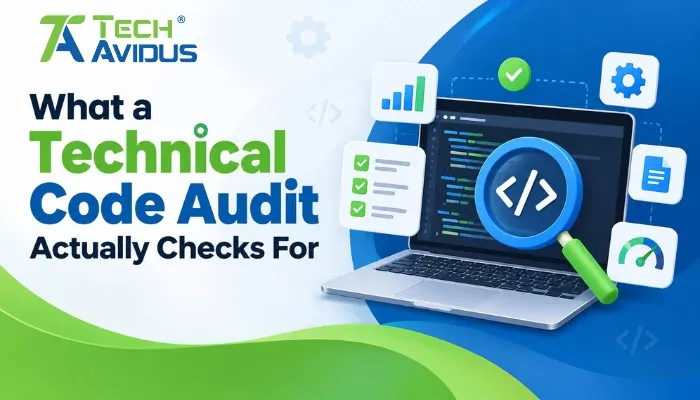
A developer should be comfortable reviewing an unfamiliar repository and producing an objective assessment before changing it.
A proper audit can examine architecture, duplicated logic, dependencies, database queries, authentication, authorization, error handling, secrets management, API communication, testing coverage, and deployment configuration.
This is particularly important when evaluating the signs your AI app needs a code audit. Repeated production bugs, unexplained behavior, duplicated components, insecure configurations, difficult deployments, and developers being afraid to modify existing code can all justify a deeper review.
3. Ask How They Evaluate Security
A developer working on an AI-generated application should not assume that functioning code is secure code.
If you're asking, is my AI-generated app secure, the answer cannot come from simply checking whether the application runs. Authentication, authorization, input validation, sensitive-data handling, dependency security, API permissions, logging, and AI-specific risks should be reviewed.
OWASP's 2025 guidance for LLM applications highlights risks including prompt injection, sensitive information disclosure, supply-chain weaknesses, and improper output handling. These considerations are relevant when AI capabilities are part of the application's architecture.
4. Understand Their Approach to Technical Debt
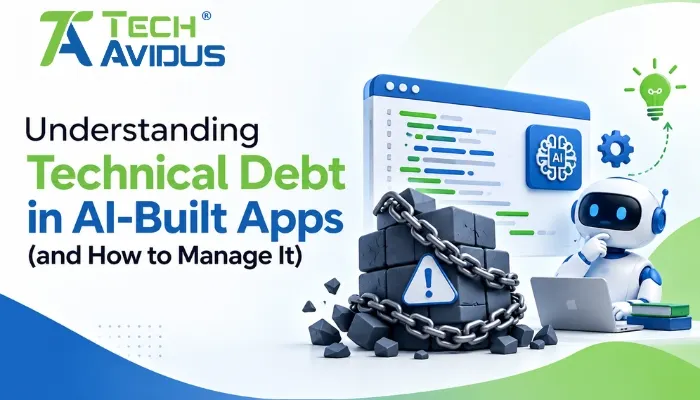
AI-assisted development can accelerate experimentation, but rapid generation can also leave behind duplicated functions, inconsistent patterns, temporary workarounds, weak documentation, and unnecessary dependencies.
This technical debt from AI coding should be assessed according to its actual impact. Not every imperfect piece of code requires immediate replacement.
An experienced developer should distinguish between harmless cleanup and technical debt that creates security, reliability, scalability, or maintenance risks.
5. Check Whether They Can Stabilize an Existing Codebase
The developer you choose should be comfortable inheriting someone else's work.
The objective is often to stabilize AI-generated codebase components without unnecessarily throwing away functionality that already works. This requires controlled refactoring, regression testing, dependency management, environment configuration, deployment checks, and clear documentation.
Ask potential developers to explain how they would approach an unfamiliar repository before they begin changing production code.
What Should a Developer Check Before Fixing AI-Generated Code?
A responsible assessment should cover the complete application rather than focusing only on the bug reported by the client.
Architecture and Code Quality
The developer should map the major application components and understand how the frontend, backend, database, APIs, AI services, authentication, and infrastructure interact.
They should identify tightly coupled modules, duplicated functionality, inconsistent coding patterns, unnecessary dependencies, and architectural decisions that could create problems as the product grows.
Security and Access Control
Security reviews should examine authentication, authorization, credentials, environment variables, API keys, database permissions, user input, file handling, and third-party integrations.
For AI-enabled applications, the review should also consider AI-specific risks and how model outputs interact with application logic.
NIST's Secure Software Development Practices for Generative AI and Dual-Use Foundation Models extends secure software development guidance with considerations specifically related to AI systems and the software development lifecycle.
Testing and Reliability
AI-generated applications can appear stable during demonstrations while still having limited automated testing.
A developer should review unit tests, integration tests, end-to-end testing, error handling, logging, monitoring, and regression coverage. The objective is to make future changes safer, not simply to repair today's visible bug.
Dependencies and Deployment
Outdated or unnecessary packages can create security and maintenance concerns. Deployment configuration should also be checked for differences between development, staging, and production environments.
A developer should understand the complete path from source code to production and document anything that could cause deployment failures.
Advantages and Limitations of Hiring a Specialist
Advantages
Faster diagnosis: A developer experienced in AI-generated applications can recognize recurring patterns such as duplicated code, fragile integrations, and missing safeguards.
Reduced unnecessary rewriting: A structured audit can identify components that are already sound and can be retained.
Better production readiness: Security testing, automated tests, documentation, monitoring, and deployment practices can be incorporated into the stabilization process.
Clearer technical direction: Instead of fixing isolated symptoms, an experienced engineer can create a prioritized roadmap for the remaining work.
Limitations
Not every codebase can be rescued: If fundamental architecture, requirements, or infrastructure are unsuitable, some components may need substantial redesign.
A fix can expose deeper problems: Resolving one visible bug may reveal dependency, database, authentication, or architectural issues that were previously hidden.
Developer quality varies: A developer who is excellent at feature development may not necessarily have the experience required for code audits, security reviews, or legacy-code stabilization.

Real-World Scenarios: When the Right Developer Makes a Difference
Consider a startup that used an AI coding assistant to build a customer-management application. The application works during demonstrations, but new features frequently break existing functionality.
Instead of immediately rebuilding it, an experienced engineer reviews the repository, maps the architecture, examines authentication and database interactions, identifies duplicated logic, and introduces targeted tests.
In another scenario, a founder inherits an application from a previous developer. Nobody knows which parts were generated by AI, which dependencies are required, or why certain services communicate in a particular way.
The first objective should be understanding the system. Documentation, architecture mapping, dependency analysis, and a prioritized risk report can give the new developer enough context to make controlled changes.
TechAvidus describes a similar audit-first approach for AI-generated applications: review the repository and architecture, identify risks, then determine whether targeted stabilization or more substantial redevelopment is appropriate.
Best Practices for Choosing Your Developer
Ask for an Assessment Approach
Before hiring, ask the developer what they would inspect during the first stage. Strong answers should mention architecture, security, dependencies, testing, database design, integrations, and deployment rather than only debugging.
Request Relevant Experience
Look for evidence of work involving AI-assisted development, existing-codebase modernization, application security, API integrations, cloud deployment, and production debugging.
Avoid Automatic Rewrite Recommendations
A developer should be able to explain why a component needs replacement. "The code is AI-generated" by itself is not sufficient evidence that the application needs a complete rewrite.
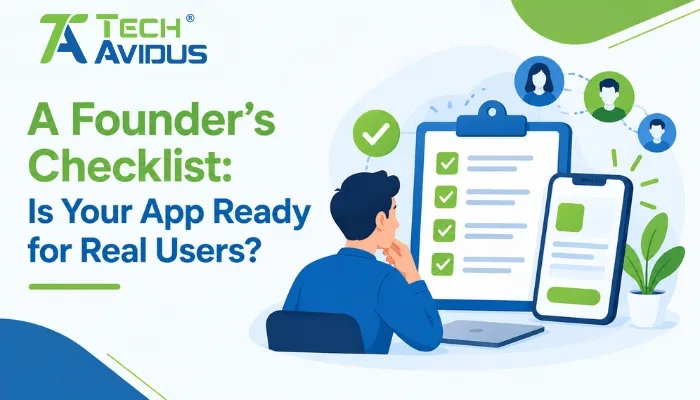
Use an App Readiness Checklist
An app readiness checklist for startups can help founders evaluate whether an application is prepared for real users.
The checklist should include authentication, authorization, data protection, automated testing, error handling, dependency management, monitoring, deployment processes, documentation, database reliability, API security, and backup or recovery procedures.
Require Documentation
Every significant fix should leave the codebase easier to understand.
Documentation should explain important architectural decisions, environment configuration, deployment procedures, known limitations, and remaining technical risks so the next developer does not have to rediscover the same information.
Recap: What Makes a Developer Right for AI-Generated Code?
The right developer for an AI-generated application is not simply someone who can write code quickly.
They should be able to inspect an unfamiliar codebase, identify security and architectural risks, understand technical debt, test changes, document decisions, and determine whether the existing foundation can be stabilized.
A code audit should come before major redevelopment whenever the application's current condition is unclear. The result should be a prioritized technical roadmap rather than an automatic recommendation to rebuild everything.
For teams that need additional engineering support, [TechAvidus — Vibe Coding Rescue Services] can be used as a relevant internal resource for AI-generated application assessment and stabilization.
Conclusion
Choosing a developer for an AI-generated application is ultimately about finding someone who can understand what already exists before deciding what should change.
The right engineering process starts with assessment, continues with prioritized fixes and testing, and ends with a maintainable system that the team can confidently extend.
If your AI-built application is working but difficult to trust, maintain, or scale, start with an independent code and architecture assessment rather than immediately rebuilding it.
For help reviewing, stabilizing, and preparing an AI-generated application for production, explore Vibe Coding Rescue Services or request a free consultation with the TechAvidus team.

Bhavesh Ladva
Bhavesh Ladva is an AI Developer and rapid product development expert with over 10 years of experience in AI, machine learning, deep learning, and NLP. He specializes in turning ideas into functional, scalable products using modern AI-powered development tools such as Lovable, Bolt, Claude, and other emerging AI platforms. His experience spans AI integrations, APIs, automation, cloud platforms, and intelligent workflows, enabling him to take products from concept to production efficiently.