Turning Scattered Property-Risk Feeds Into One AI-Ready Server for PropertyScoop

A production MCP server built for PropertyScoop that turns government and commercial data sources into one unified property intelligence layer, enabling programmatic access for AI agents through MCP clients like Claude Desktop, Cursor, and Windsurf.

Real Estate / PropTech / Location Intelligence MCP Server, New Build Delivered in Weeks Node.js / TypeScript / JSON-RPC 2.0

Let’s discuss how we can help you

PropertyScoop Banner 1

Our Clients

Mate IT
Eshopbox
Client Care
Origin
Pfizer
Gatekeeper Press
CPME
Tcp
Traincenter
Block Aero
Wisuites
OrgVitality
My Realty Works
Pynora
OTS
GSK
Angi
Keepertax
eepulse
Vatara
Our customers say Excellent 4.7 out of 5 based on reviews
Property Risk Data Overview

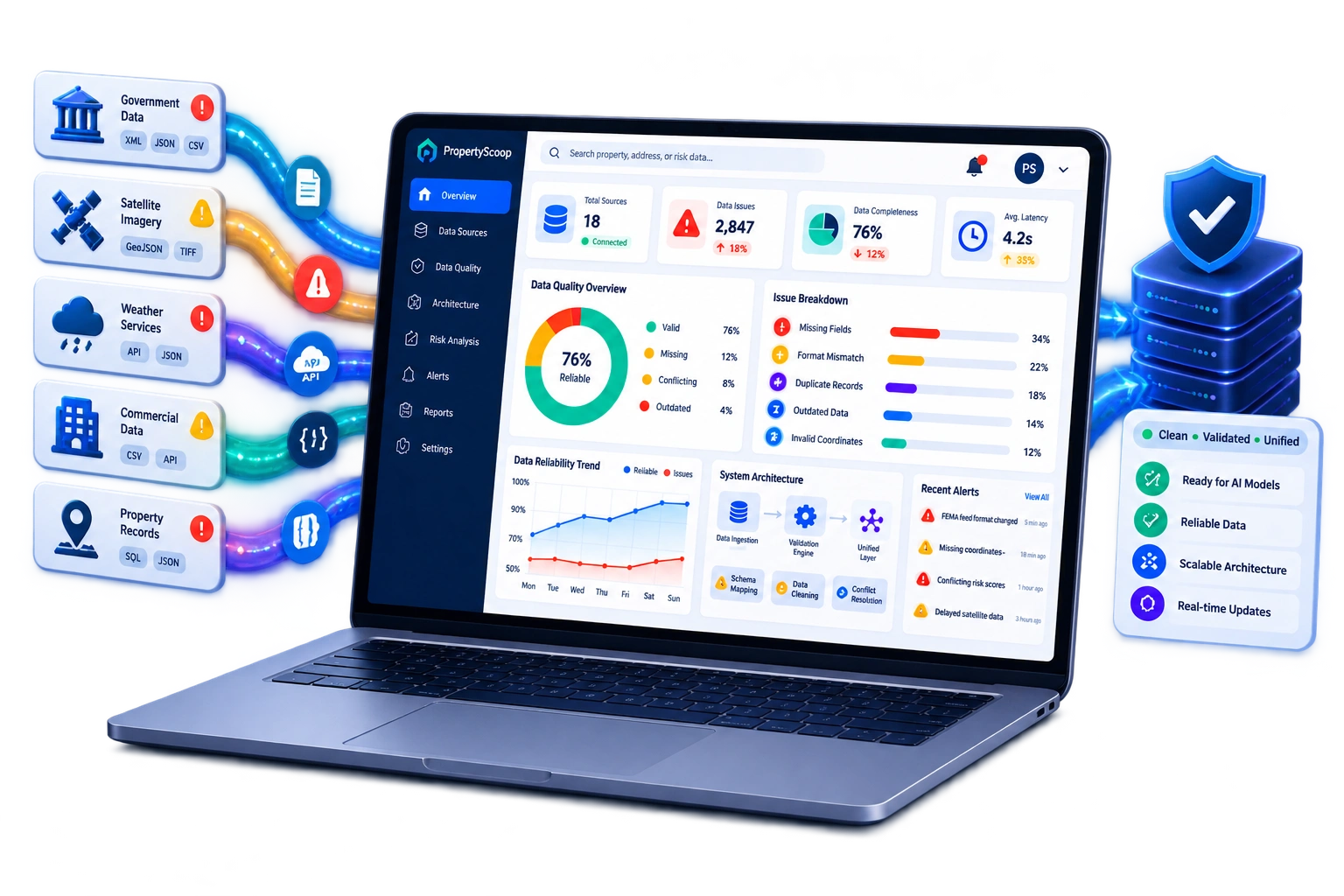
Property Risk Data, Scattered Across Government and Commercial Sources

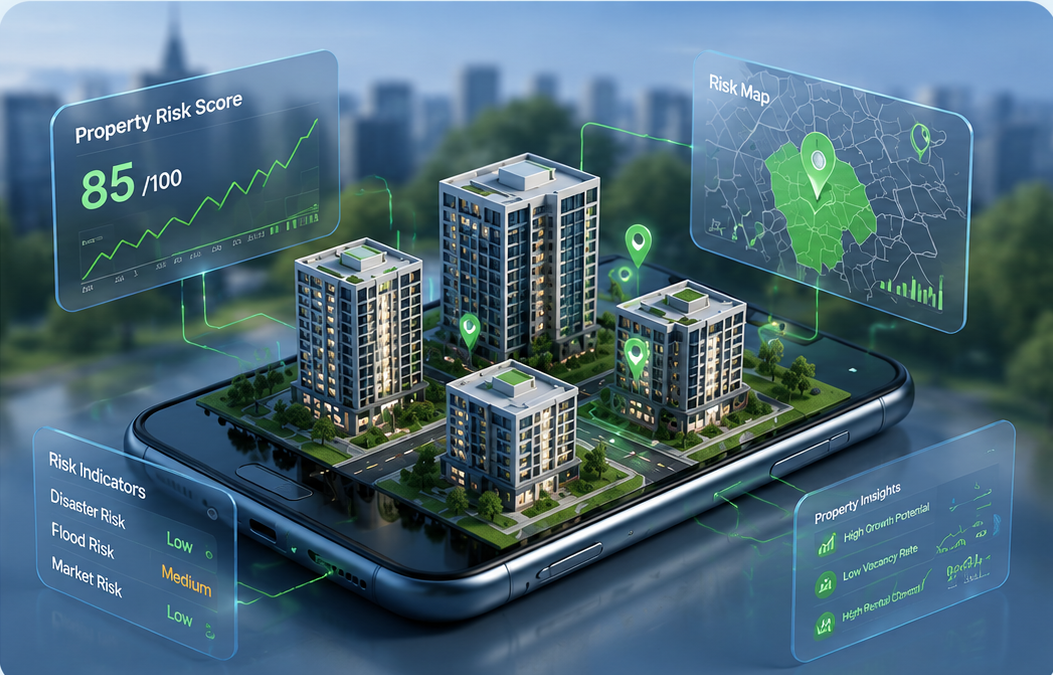
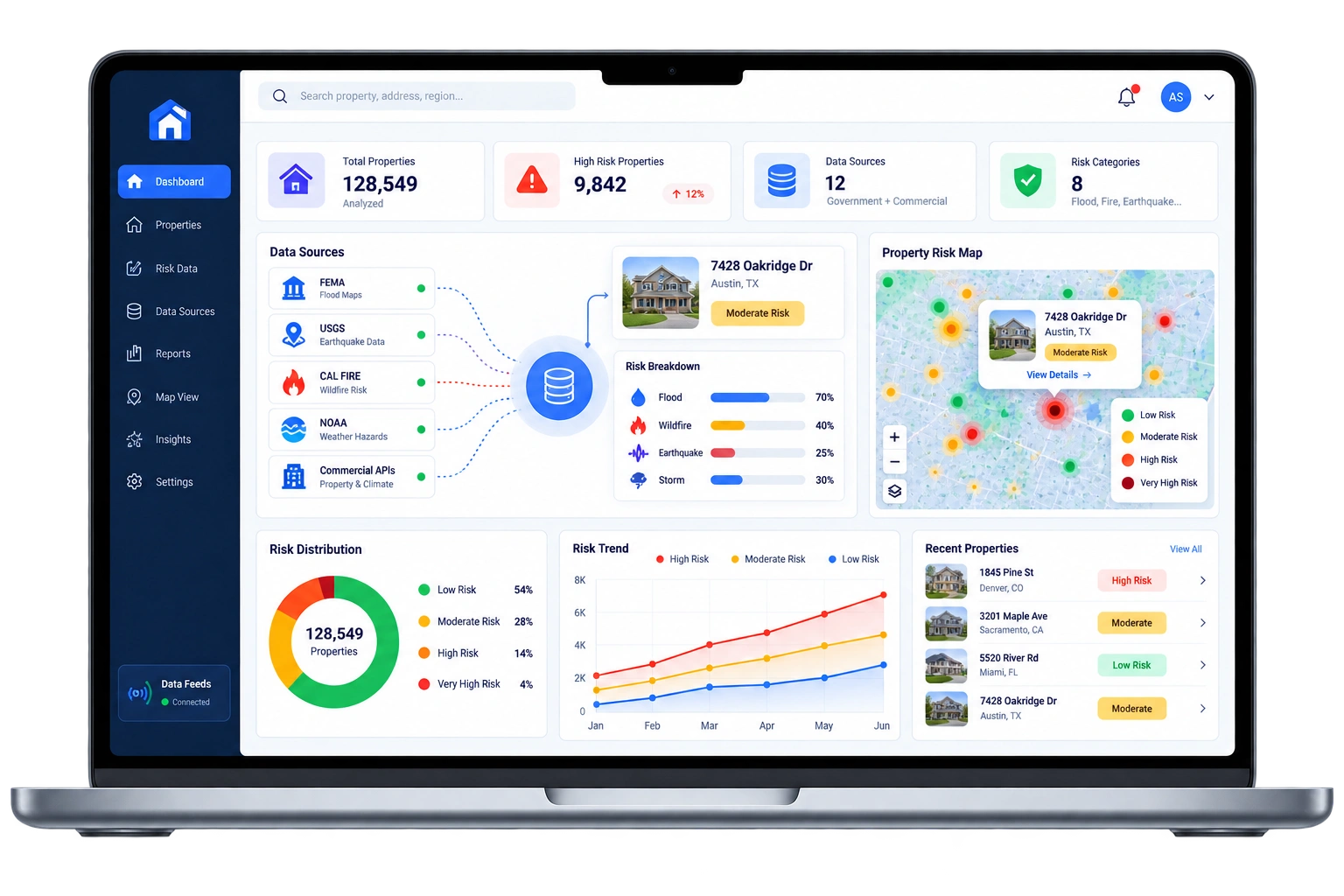
PropertyScoop is a PropTech data startup building a property intelligence product for buyers, agents, lenders, and insurers who need fast, address-level environmental and infrastructure risk data - drinking-water compliance, RF exposure, noise, tree-strike risk, substation proximity, sun orientation. That data exists, but it's scattered across separate government and commercial sources, each with its own format and gaps. Getting it wrong on safety categories like drinking-water compliance undermines product trust. TechAvidus built the standalone MCP server that aggregates this data and exposes it to AI agents securely.

The Real Challenge: Data Reliability & Architecture

Business Challenge: As an early-stage startup, PropertyScoop's product is the data. Inconsistent or wrong information - especially for drinking-water compliance - would directly undermine customer trust. There was no room to redo it later.
Latency & Partial Failures: Reconciling response times across independent external data sources (EPA, FCC, satellite ML, noise models) queried per single address request.
Metered Billing & Entitlement: Designing per-tool, per-call metered billing with individual free-tier counters and graceful "tool not enabled" responses enforced at the gateway layer.
Data Normalization: Normalizing inconsistent government records (e.g., private-well addresses lacking EPA data) into a consistent schema.
Multi-Service Orchestration: Coordinating multiple independently available external services with different response times and reliability characteristics within a single MCP tool call.
PropertyScoop Challenges
PropertyScoop Solution

A Standalone MCP Server Built for AI Agents, in Weeks

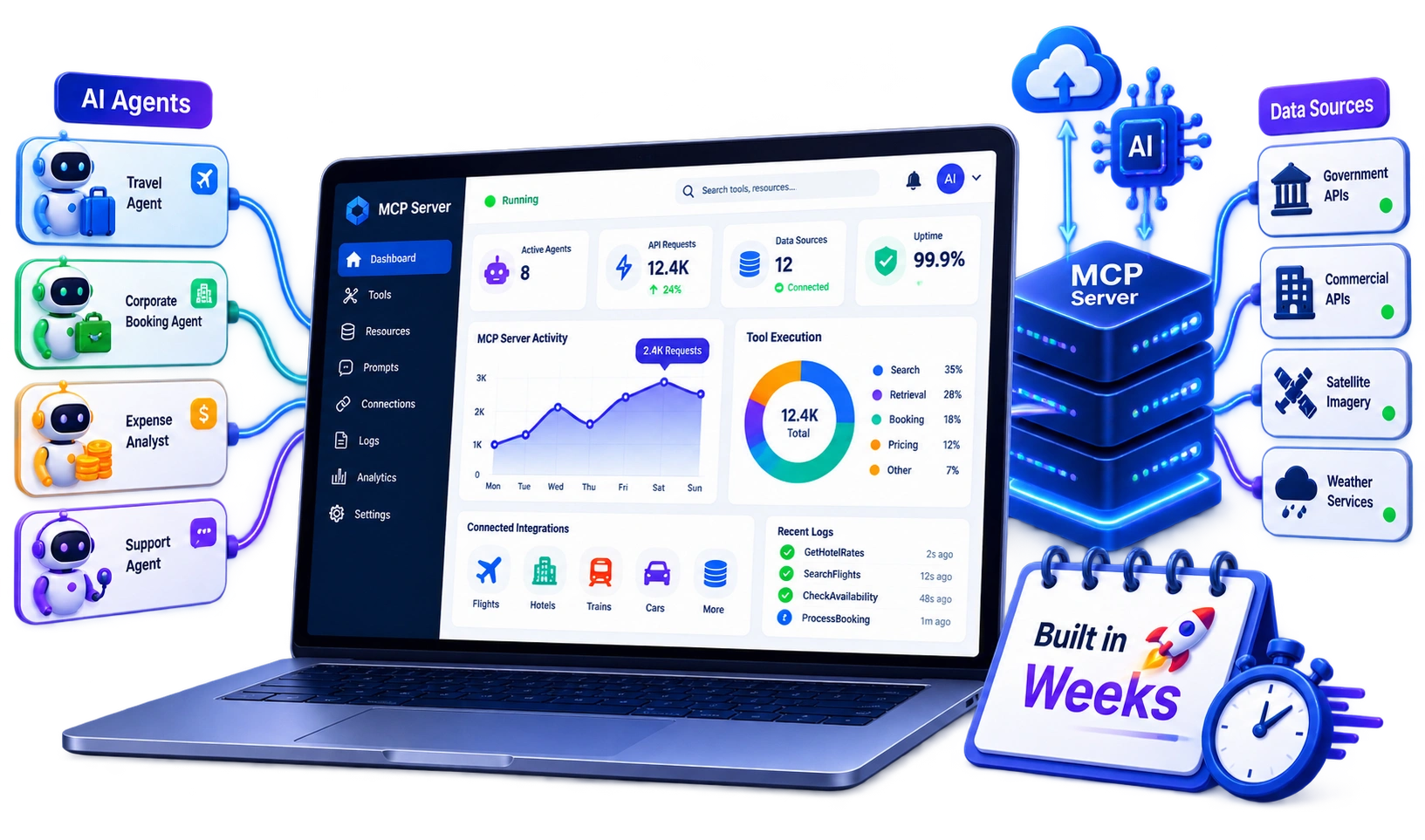
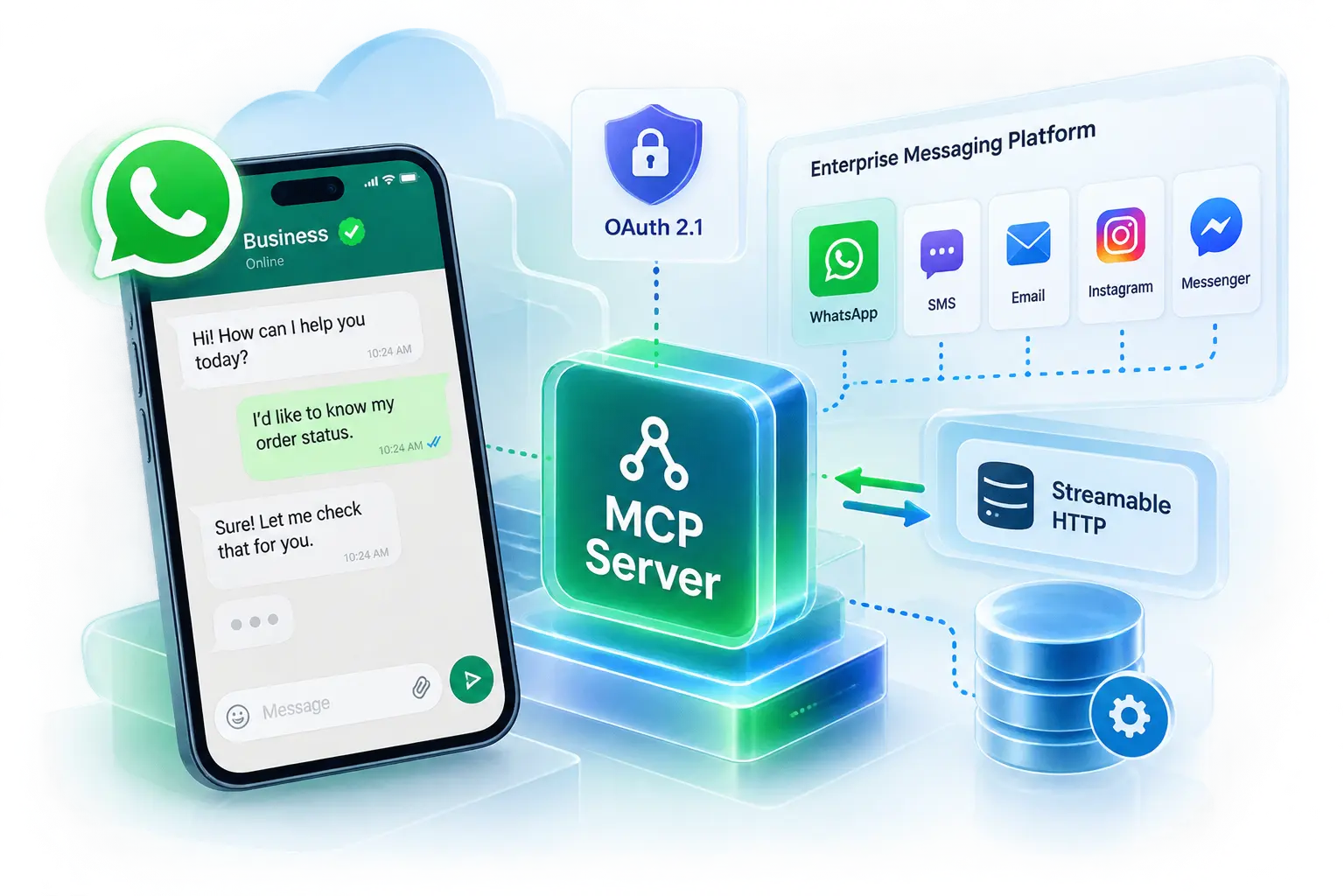
TechAvidus designed and built a standalone remote MCP server exposing independent property-intelligence tools behind one normalized JSON-RPC 2.0 interface, over streamable-HTTP transport. The build included API-key authentication, feature-level per-tool entitlement, and per-tool metered billing with individual free-tier caps.

The project was delivered in weeks from initial development through production deployment, keeping the scope focused on core product requirements like point-in-time snapshot APIs.

Designing a Remote MCP Server for One AI-Ready Interface

Before development began, TechAvidus worked with PropertyScoop to define:

Requirements & Use Cases Architecture Data Sources MCP Feasibility Security & Authentication Prototype Validation

The team then validated the approach with a prototype before moving into full development.

Centralized AI Interface

The central decision was architectural: instead of asking every AI application that wanted this data to integrate with EPA, FCC, satellite imagery, weather, and infrastructure datasets individually, TechAvidus centralized that work into one MCP server that abstracts these sources behind a single, standardized Model Context Protocol interface.

Modular Design & Security

Each property-intelligence capability - water quality, RF exposure, noise, tree risk, and the rest - was built as its own independent service module, so a future capability can be added without touching what already ships.

API-key authentication was designed with feature-level access control from the start, so individual tools can be enabled or disabled per customer rather than granting all-or-nothing access.

How PropertyScoop's Remote MCP Server Works Across Independent Data Providers

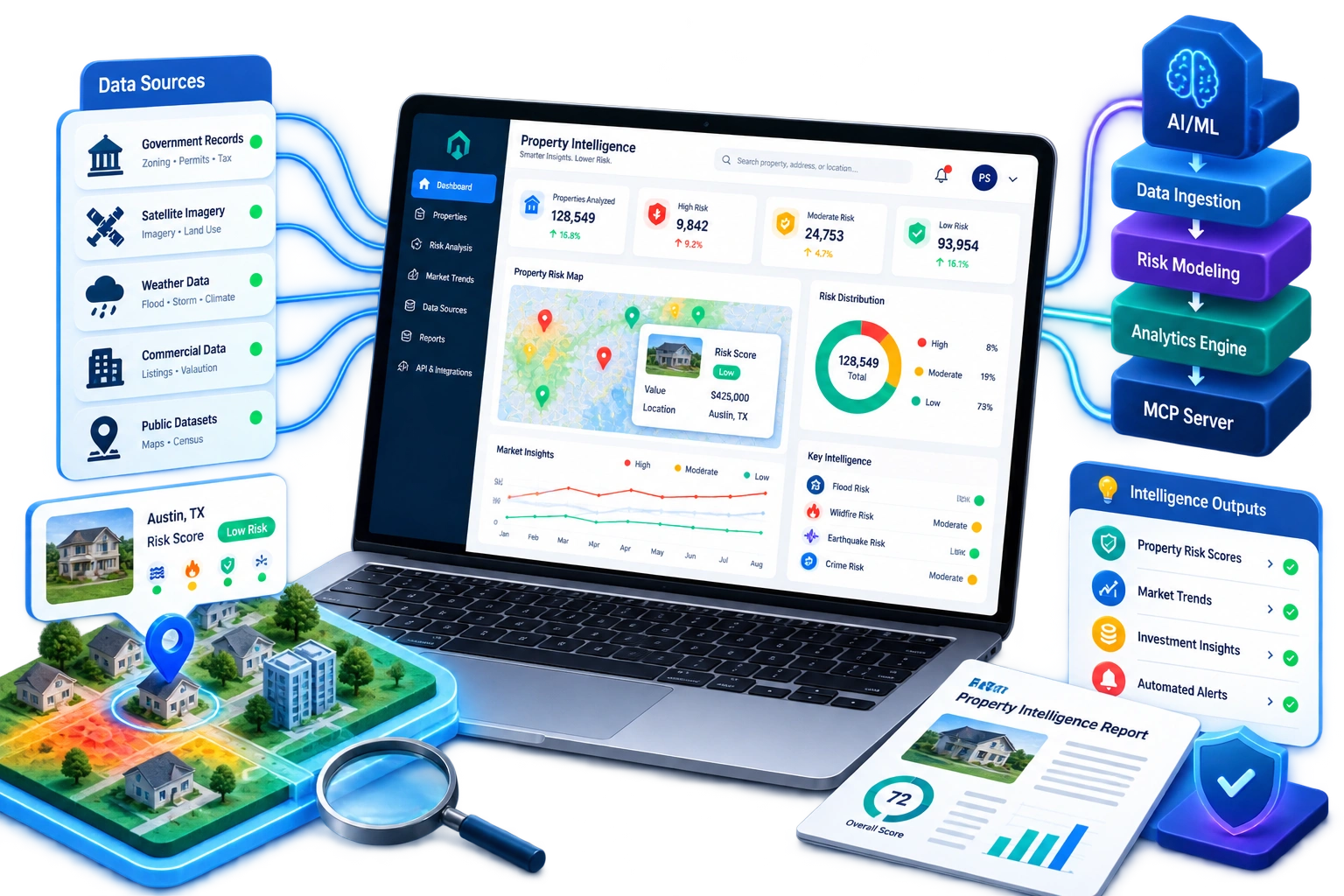
PropertyScoop's solution is a centrally hosted remote MCP server, reachable over streamable HTTP and exposed to AI clients through a standardized JSON-RPC 2.0 interface. The server acts as the orchestration and aggregation layer, routing requests to the appropriate property-data service across government and third-party geospatial/environmental data sources and returning results through a consistent interface.

Architecture Blueprint
Three-Tier Request & Orchestration Flow
Tier 01 · Client
AI Clients

Tool requests via MCP standard clients.

Claude Cursor Windsurf
HTTP / RPC
Tier 02 · Core Engine
Remote MCP Server

Orchestration, validation, dispatching & normalization.

Auth Validation Dispatcher Normalizer Timeouts
Adapters
Tier 03 · Providers
External Services

Government & commercial data feeds.

EPA FCC Satellite Weather

Inside the Server Engine

Inside the server runs an authentication layer (API-key validation), request validation, a tool dispatcher routing each call to its own independent service adapter, and a response formatter that normalizes every source's output into one consistent schema before it reaches the AI client.

Each adapter owns its own timeout and fallback handling - ensuring one slow or unavailable data source never blocks or corrupts the overall response.

Robust Incomplete Data Handling

The server handles incomplete data as a valid outcome rather than an error. For example, a private well may have no corresponding EPA record, while a rural property may have limited tree-canopy data.

In these cases, the server returns an explicit "no data" state in the structured response, allowing the AI client to continue processing available property information rather than treating missing data as a failed request.

Technology Stack of MCP Server

Language / Runtime
Node.js, TypeScript
Protocol & SDK
MCP, JSON-RPC 2.0

Streamable HTTP, MCP SDK

Authentication
API-key (X-API-Key)

Feature-level entitlement

External Integrations
EPA, FCC, Satellite-ML, Noise

Storm, Weather, Substation data

Client Compatibility
Claude Desktop, Cursor, Windsurf

Via mcp-remote bridge

Property Intelligence Capabilities & Architecture

The server acts as an orchestration and aggregation layer, routing requests across government and third-party geospatial datasets and returning results through a consistent interface with isolated fallback handling.

Key Feature Modules:
Water Quality: Pulls EPA SDWIS compliance records, compliance grades (A-F), violation counts, and gracefully handles private-well exceptions with an explicit "no data" state.
RF/EMF Exposure & Noise Scoring: Estimates radiofrequency exposure from FCC transmitters within a 2-mile radius and combines transportation noise metrics against EPA 65 dB loud thresholds.
Falling-Tree Risk & Substation Proximity: Blends tree density, historical wind speed, and precipitation analytics alongside geospatial proximity mapping for nearby electrical infrastructure.
Facing-Direction Detection: Uses satellite imagery and a third-party ML classification model to calculate cardinal property orientations (labeled experimental).
Property Intelligence Architecture

Integrating PropertyScoop's Data Providers and Services

The server integrates multi-domain government and commercial feeds into a unified architecture, bridging local MCP clients to remote streamable-HTTP endpoints seamlessly.

Integrated Government & Commercial Data Feeds

Each integration is queried over REST/HTTP and its output is normalized into the server's JSON-RPC 2.0 response schema.

EPA SDWIS
Safe Drinking Water Information System
FCC Records
Transmitter licensing databases
Satellite & ML
Third-party classification (Experimental)
Noise Model
National transportation noise calculations
Weather & Canopy
Historical storm & tree-canopy datasets
Geospatial Data
Power-substation proximity mapping

Client-Side Bridge Architecture

On the client side, the mcp-remote bridge package connects local MCP clients such as Claude Desktop directly to the remote streamable-HTTP server securely and reliably.

Reliability & Latency Handling

What made the integrations complex wasn't any single provider - it was their different reliability, latency, and data-completeness characteristics queried per address request, normalized without letting a slow provider block the overall response.

Note: The facing-direction tool relies on a third-party satellite/ML classification model and is therefore labeled experimental.

From Proof-of-Concept to Production

The solution was validated through functional, integration, and end-to-end MCP workflow testing before being deployed to PropertyScoop's production environment, with secure authentication and operational monitoring in place.

What the Project Delivered

Product Capability

  • One normalized JSON-RPC 2.0 interface now provides AI clients with access to PropertyScoop's government and commercial property-risk data across water quality, RF exposure, noise, tree risk, substation proximity, and facing direction.
  • MCP client compatibility confirmed for Claude Desktop, Cursor, and Windsurf via the mcp-remote.

Technical Outcome

  • Isolated per-source failure handling built and validated across all external integrations - a slow or unavailable provider doesn't block or corrupt the overall response.
  • Explicit "no data" response states defined and implemented for structurally missing data.
  • Feature-level per-tool entitlement and metered billing, with individual free-tier caps, delivered as part of the platform layer itself.

Delivery Evidence

  • The project was delivered in weeks, not months, from initial development through production deployment, with close collaboration and ongoing input from the PropertyScoop team throughout the process, along with input from our AI engineering team.
  • Functional, integration, and end-to-end MCP workflow validation completed before the server reached PropertyScoop's production environment.

What Our Clients Say

Toby Ehrenkranz

"TechAvidus demonstrated strong technical expertise in designing and delivering our MCP server. They translated a complex integration challenge into a practical, maintainable solution that aligned with our product vision."

Toby Ehrenkranz · Founder · PropertyScoop

What This Build Tells You About MCP Server Development

If you're evaluating MCP server partners for a similar build, here's what this project actually demonstrates:

Aggregating structurally different data sources without sacrificing reliability. Independent government and commercial providers, each with different failure modes, latency, and data completeness, are handled through one consistent interface with isolated per-source failure handling. This is the same engineering discipline we bring to every MCP Server Development project.

Designing metering and entitlement into the platform layer. Per-tool free-tier caps and feature-level access control were built into the platform design rather than added as a flat API-key restriction afterward, enabling usage-based billing for MCP server access.

Building MCP as a first-class access layer. The solution was designed and delivered as a remote MCP server from the outset, providing PropertyScoop's property intelligence to AI clients through a standardized interface rather than retrofitting MCP onto an existing integration.

Explore Custom MCP Architecture Services for PropTech

Scale your real estate ecosystem with secure, context-aware Model Context Protocol servers engineered to connect enterprise platforms with leading AI models.

ISO 9001:2015 Certified
11+ Years in Software & AI Engineering
92% Client Satisfaction Rate

Frequently Asked Questions

The number of external data sources you need to aggregate, the complexity of the per-source failure and fallback handling, how granular your billing and entitlement needs to be, and whether any tool requires an ML or experimental component rather than a structured-data lookup. PropertyScoop's project involved all four considerations.

No — the wrapper is the easy part; making the aggregation reliable is where the engineering complexity lies. This project required isolated failure handling across independently varying data sources, explicit handling of missing data as a valid state, and per-tool metering and entitlement rather than a simple API-key gate.

This project was delivered in weeks, from proof-of-concept through production deployment, including functional, integration, and end-to-end MCP workflow validation, secure authentication, and operational monitoring.

Because PropertyScoop needed an MCP-native product with a standardized interface for AI clients, eliminating the need for each client to integrate with the underlying data services separately. The solution provides a remote MCP server with a standardized JSON-RPC 2.0 tool interface, allowing the underlying property-data capabilities to be exposed through one consistent access layer.

Yes. PropertyScoop's server uses API-key authentication and feature-level entitlement, allowing individual tools to be enabled or disabled per customer rather than granting all-or-nothing access. This same per-tool control supports usage metering and billing at the platform level.

Building Something Similar?

Have property, environmental, or infrastructure data scattered across multiple sources that you want to make accessible through a single AI interface? Let's discuss your MCP server.

Relevant Case Studies

Schedule A Free Expert Session

Get Recommendations, Custom Solutions, Developer's Resume, or Estimations.

Experts You Can Trust

We would like to understand your needs. Before we start, please fill in the form or send your RFP or inquiry via hello@techavidus.com →

105+
In-House Experts
11+
Years of Experience
300+
Projects Delivered
250+
Appreciative Reviews
92%
Client Satisfaction Rate
0
IP-Related Complaints
Agile Development Process
15+
Countries Served
Top Rated On
Google Clutch Upwork GoodFirms

Start a Conversation

Fill out your information and we will assemble the scope.