

Customer Relationship Management (CRM) software has become a vital tool for businesses seeking to streamline their sales, marketing, and customer support operations. At its core, a CRM system serves as a centralized hub for customer data, enabling teams to gain deeper insights, track interactions more effectively, and enhance overall operational efficiency.
Although popular off-the-shelf platforms such as Salesforce, Zoho, and HubSpot are widely used, they don’t always align perfectly with every organization’s processes. Many businesses choose AI Driven custom CRM development to address specific workflows, system integrations, and industry-driven requirements that standard solutions cannot fully support.
This is where artificial intelligence (AI) is redefining the landscape. AI is rapidly transforming industries worldwide, and custom software development is no exception. When integrated into custom CRM systems, AI introduces smarter automation, predictive capabilities, and data-driven decision-making, opening new opportunities for efficiency and innovation.
Industry adoption reflects this shift. Studies indicate that nearly 80% of users are expected to adopt AI-driven solutions in the coming years, accelerating automation across sectors. Currently, 35% of organizations have already implemented AI, 77% of modern devices leverage AI capabilities, and 90% of businesses view AI as a key driver of competitive advantage.
What Is an AI Custom CRM
An AI custom CRM is an easier, smarter way to manage customer relationships—without making things complicated or overwhelming. Think of it as a system that helps your business remember customers and respond to them in a more meaningful way.
At its core, a CRM is a place where customer information lives. Names, messages, purchases, and past conversations. An AI-powered custom CRM goes beyond storage. It understands this data. It observes patterns, learns customer preferences, and tracks behavior over time. Using this understanding, it helps your team make better decisions and take the right actions.
The word custom matters here. Every business works differently. Some communicate through apps, others rely on email, phone calls, or social platforms. A custom CRM is designed around how your business already works. You do not need to change your process—the system adapts to you. With AI built in, it keeps improving as you use it, becoming smarter and more helpful over time.
Imagine a system that reminds your team when a customer needs attention. One that suggests the best time to follow up. One that highlights which leads are most likely to convert. That is what an AI custom CRM does in simple terms. It helps you focus on the right customers at the right time, without guesswork.
It also removes much of the manual effort. No searching through old conversations. No guessing what a customer might want. Important insights come to the surface automatically. Your team works with less stress. Customers feel understood. Conversations feel natural, not scripted.
By 2026, customers will not tolerate slow responses or generic communication. They expect brands to understand them. An AI custom CRM makes this possible behind the scenes. It does not replace human interaction—it strengthens it. That is why it is such a powerful tool for businesses that want to grow while keeping relationships personal.
Why 2026 Is the Turning Point for AI CRM
By 2026, artificial intelligence is set to fundamentally reshape how businesses manage customer relationships. While many organizations have experimented with AI-driven tools in recent years, this marks the point where AI-powered CRM systems transition from optional enhancements to essential business infrastructure.
1. AI Becomes Smarter and More Human-Centric
AI is no longer limited to data processing. By 2026, AI CRM systems will demonstrate a deeper understanding of human behavior, anticipate customer needs, and recommend highly personalized engagement strategies. These systems function like a dedicated team member—always available, continuously learning, and consistently guiding the next best action for every customer.
2. True Personalization at Scale
Delivering personalized experiences without increasing operational burden has long been a challenge. AI CRM now makes this achievable. Businesses can engage thousands of customers simultaneously with messages tailored to individual preferences, behaviors, and histories. In 2026, personalization evolves from a strategic ambition into a standard operating practice.
3. Where Automation Meets Intelligence
Automation alone is not new, but intelligent automation is. Modern AI CRM platforms analyze customer behavior, generate actionable recommendations, and alert teams to potential issues before they escalate. This results in faster decision-making, reduced errors, and a more seamless customer journey across every touchpoint.
4. Smarter, Seamless Integrations
By 2026, AI CRM systems will no longer operate in isolation. They will integrate seamlessly with business applications, social platforms, and sales tools, enabling uninterrupted data flow across departments. This unified ecosystem ensures that teams have access to accurate insights without additional effort or complexity.
5. Cost Efficiency Aligned with Growth
Operational efficiency and business growth are no longer competing priorities. AI CRM systems help organizations reduce manual effort while driving revenue through intelligent workflows and predictive analytics. Businesses can allocate resources more effectively and build stronger, more profitable customer relationships.
6. Competitive Advantage Becomes Essential
By 2026, organizations that fail to adopt AI CRM solutions risk falling behind. Customers increasingly expect fast, personalized, and frictionless experiences. AI CRM is no longer a differentiator—it is the foundation for delivering consistent, high-quality engagement in a competitive market.

15 Key Benefits of an AI-Powered CRM
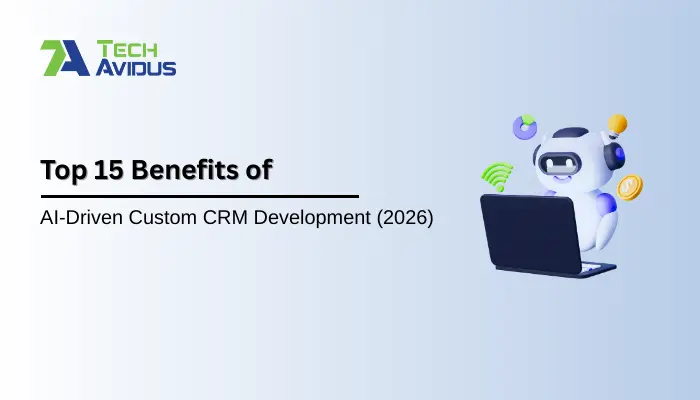
In 2026, AI-powered CRM systems are no longer optional tools — they’ve become essential for businesses striving to deliver personalized, efficient, and proactive customer experiences. By combining advanced data intelligence with automation and predictive capabilities, AI CRMs help organizations scale smarter and grow more strategically.
1. Superior Data Analysis and Predictive Insights
AI-powered CRMs analyze vast volumes of customer data — from interactions and purchases to engagement patterns — to identify trends and forecast future behavior. This empowers businesses to make proactive decisions and anticipate customer needs.
2. Personalized Customer Engagement at Scale
AI segments audiences based on behavior and preferences, enabling highly relevant communication and tailored experiences for each customer — without added workload.
3. Intelligent Automation of Routine Tasks
Repetitive activities like data entry, follow-ups, reminders, and scheduling are automated, freeing teams to focus on high-value interactions and relationship building.
4. 24/7 Customer Support with AI Chatbots
AI-driven chatbots provide instant responses to common queries at any hour, improving support efficiency and customer satisfaction without human intervention.
5. Improved Lead Scoring and Qualification
Predictive analytics prioritize leads based on conversion potential, ensuring sales teams focus their efforts where results are most likely.
6. Accurate Sales Forecasting
Using historical data and trend analysis, AI CRMs provide reliable sales forecasts, helping teams plan better and reduce resource uncertainty. For pharmaceutical companies, AI-powered Pharma CRM software also analyzes doctor interactions, prescription trends, and territory performance to improve forecasting accuracy and support better field force planning.
7. Real-Time Interaction Insights
AI continuously monitors customer interactions and behaviors, providing real-time data that enables swift responses to opportunities or risks.
8. Enhanced Customer Retention
By detecting early signs of disengagement or churn risk, AI enables timely outreach and personalized care, strengthening long-term loyalty.
9. Automated Data Cleansing and Enrichment
AI ensures CRM data remains accurate and updated through automated deduplication, verification, and enrichment — a critical foundation for meaningful insights and personalization.
10. Omnichannel Consistency
AI empowers seamless experiences across channels — whether web, social media, email, or in-app — providing consistent messaging and engagement everywhere customers interact.
11. Enhanced Marketing Performance
By uncovering behavior-based patterns, AI CRMs help tailor campaign audiences and messaging, increasing relevance and conversion rates.
12. Smarter Workflow Recommendations
AI suggests next actions and workflow optimizations based on historical performance, helping teams prioritize tasks and improve processes.
13. Cross-Team Alignment and Collaboration
Unified AI insights ensure marketing, sales, and service teams operate from the same customer understanding — reducing silos and improving consistency.
14. Reduced Operational Costs and Time Savings
Automation and prediction reduce manual workload and minimize errors, lowering operational expenses while enhancing productivity.
15. Customer-Centric Engagement Becomes Standard
By 2026, customers expect fast, personal, and human-like interactions. AI CRMs help businesses meet — and exceed — these expectations, creating better experiences that build loyalty and competitive advantage.
Future Trends in AI CRM Solutions
As customer expectations continue to rise, AI-powered CRM systems are evolving rapidly. In 2026, these platforms are no longer focused solely on data management — they are becoming intelligent systems that guide decisions, personalize experiences, and drive sustainable growth. Below are the five most impactful AI CRM trends shaping the future.
1. Predictive Intelligence Becomes Standard
In 2026, AI CRMs move beyond tracking customer activity to predicting future behavior. By analyzing historical data and real-time interactions, these systems forecast buying intent, churn risk, and engagement patterns. This allows businesses to act proactively rather than reactively, making smarter decisions and addressing customer needs before they arise.
2. Hyper-Personalization at Scale
Personalization in 2026 is no longer limited to basic segmentation. AI CRMs now deliver hyper-personalized experiences by understanding individual preferences, intent, and timing across multiple touchpoints. Every message, recommendation, or follow-up is tailored in real time, enabling businesses to engage thousands of customers with the same level of care as one-to-one interactions.
3. Conversational AI Enhances Customer Engagement
AI-driven chatbots and virtual assistants have become more natural, contextual, and human-like. In 2026, conversational AI handles complex customer queries, provides instant support, and maintains continuity across conversations. This improves response times and customer satisfaction while allowing human teams to focus on high-value interactions.
4. Intelligent Automation With Actionable Insights
Automation in AI CRMs is no longer rule-based. Intelligent systems now analyze customer behavior and recommend next best actions — such as when to follow up, what message to send, or which offer to present. This ensures efficient workflows while maintaining relevance and personalization across every interaction.
5. CRM Evolves Into a Strategic Growth Engine
By 2026, AI-powered CRM systems play a central role in revenue growth and business strategy. With advanced analytics, accurate forecasting, and real-time insights, CRM platforms support smarter sales planning, optimized marketing efforts, and stronger customer relationships. CRM is no longer a support tool — it is a core driver of business success.
Conclusion
AI-driven custom CRM development is no longer a future concept—it is a present-day necessity for businesses aiming to stay relevant, competitive, and customer-focused. As we move toward 2026, CRM systems are evolving from simple data repositories into intelligent platforms that predict behavior, personalize interactions, automate workflows, and support strategic decision-making across the organization.
From improved data analysis and real-time insights to hyper-personalization and intelligent automation, AI-powered CRMs enable businesses to build stronger relationships while operating more efficiently. More importantly, a custom AI CRM adapts to how your business works, rather than forcing you to adjust to rigid, off-the-shelf software. This flexibility ensures long-term scalability, better user adoption, and measurable business impact.
Organizations that invest in AI-driven CRM solutions today are better positioned to meet rising customer expectations, respond proactively to market changes, and drive sustainable growth in the years ahead.
Looking to build a custom AI-powered CRM tailored to your unique business needs?
TechAvidus specializes in designing and developing scalable, intelligent CRM solutions that help businesses automate smarter, gain actionable insights, and deliver exceptional customer experiences.


Bhavesh Ladva
Bhavesh Ladva specializes in MCP (Model Context Protocol) Server Development, helping businesses connect AI applications with external tools, APIs, databases, and business systems. His work focuses on building custom MCP servers that enable smoother tool execution, structured data access, and reliable AI integrations. By simplifying connections between AI models and existing workflows, Bhavesh helps teams reduce manual steps, improve process efficiency, and develop more practical AI-powered solutions. He prioritizes secure integrations, maintainable architecture, and scalable implementations aligned with real business requirements.