

Key Takeaways
- 1. MCP Server Development provides a standardised way for AI systems to securely access enterprise tools, APIs, and data sources.
- 2. Organisations can reduce integration complexity by replacing multiple custom connectors with reusable MCP servers that support different AI applications.
- 3. Built-in authentication, authorisation, and governance help organisations maintain security while enabling AI-driven automation.
- 4. Scalable MCP architectures allow businesses to expand AI capabilities without redesigning their entire integration layer.
- 5. Proper MCP implementation supports enterprise AI initiatives, including AI assistants, RAG systems, workflow automation, and intelligent agents.
Artificial intelligence is rapidly transforming how businesses automate workflows, analyze data, and deliver personalized customer experiences. However, as organizations connect AI models with enterprise applications, databases, APIs, and cloud services, they face a growing challenge: ensuring these integrations remain secure, scalable, and easy to manage. This is where MCP Server Development has become increasingly valuable.
The Model Context Protocol (MCP) provides a standardised framework that allows AI applications to communicate with external tools and data sources in a secure, structured manner. Instead of creating custom integrations for every application or AI model, organisations can develop MCP servers that expose approved resources while maintaining governance, authentication, and access control.
From our experience building enterprise AI solutions, one recurring challenge is managing multiple integrations without creating security gaps or increasing maintenance complexity. In practice, organisations adopting standardised integration architectures typically find it easier to scale AI initiatives because new applications can reuse existing connectors instead of requiring entirely new development efforts.
As enterprises continue investing in generative AI, intelligent automation, retrieval-augmented generation (RAG), AI agents, and machine learning applications, MCP Server Development is becoming an important foundation for building secure and future-ready AI ecosystems.
Why Secure AI Integrations Matter More Than Ever
Secure AI integrations are essential because AI models increasingly interact with sensitive business systems, customer information, financial records, internal documentation, and operational platforms. Hosting these AI workloads on Dedicated Server Hosting can provide greater control over infrastructure, helping organizations strengthen security and compliance.
Traditional AI integrations often rely on custom APIs developed independently for each application. While this approach may work for smaller projects, it becomes difficult to maintain as organisations deploy multiple AI solutions across departments.
Some common challenges include:
- Maintaining consistent authentication across different systems while avoiding duplicated security configurations that increase administrative overhead.
- Managing permissions for multiple AI applications accessing the same enterprise resources without creating conflicting access policies.
- Updating integrations whenever APIs change, resulting in additional development effort and potential service disruptions.
- Monitoring AI interactions with enterprise systems to maintain compliance with organisational governance requirements.
A standardised integration approach helps organisations address these challenges while supporting long-term scalability.
What Is MCP Server Development?
MCP server development is the process of building servers that implement the Model Context Protocol (MCP), enabling AI applications to securely interact with external systems through a standardised communication framework.
Rather than allowing AI models to connect directly to every database, application, or API, MCP servers act as controlled intermediaries that expose approved resources, tools, and services.
An MCP server typically provides:
- Secure access to enterprise data repositories while enforcing authentication and authorisation policies defined by the organisation.
- Standardised interfaces for AI models to retrieve information, execute approved actions, or interact with external business applications.
- Centralised governance that simplifies monitoring, auditing, and policy enforcement across multiple AI deployments.
This architecture enables organisations to build reusable integrations that serve multiple AI applications instead of creating isolated connectors for each project.

How MCP Servers Work in Enterprise AI Architectures
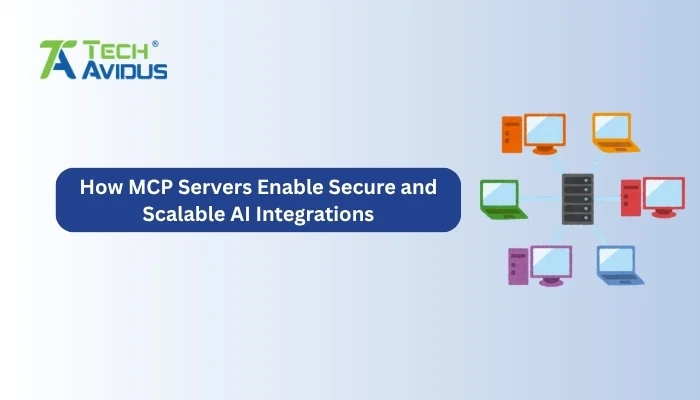
An MCP server functions as a secure communication layer between AI applications and enterprise resources.
A simplified workflow generally follows these steps:
1. AI Application Receives a Request
An employee, customer, or business process submits a request to an AI assistant or intelligent application. The AI determines whether external information or actions are required to complete the task accurately.
2. MCP Server Validates the Request
Instead of allowing direct access to enterprise resources, the AI forwards the request to the MCP server. The server authenticates the request, verifies permissions, and determines which resources are available.
3. Enterprise Systems Respond Securely
The MCP server retrieves data or performs approved operations using enterprise APIs, databases, CRM platforms, ERP systems, cloud applications, or internal services while enforcing security policies.
4. Structured Responses Return to the AI
The MCP server formats responses according to MCP standards before delivering them back to the AI application, ensuring consistency regardless of the underlying technology.
This architecture separates AI intelligence from enterprise integrations, making both components easier to maintain and scale independently.
Core Components of MCP Server Development
Successful MCP server development involves designing several interconnected components that work together to provide secure, reliable communication.
Authentication and Identity Management
Authentication ensures that only trusted AI applications can communicate with enterprise resources.
Modern implementations commonly integrate with existing enterprise identity providers, allowing organisations to extend current security policies rather than creating separate authentication mechanisms.
Authorization and Access Control
Authorisation determines what each AI application is permitted to access.
Instead of granting broad permissions, organisations can implement fine-grained access controls that limit AI interactions based on business roles, departments, resource types, or operational requirements.
This principle of least privilege significantly reduces potential security risks.
Resource Discovery
One of MCP's major advantages is standardised resource discovery.
Rather than hardcoding integrations, AI applications can identify available tools and resources exposed by MCP servers, improving flexibility while simplifying future expansion.
Tool Invocation
MCP servers expose approved enterprise capabilities as callable tools.
These may include:
- Accessing customer records through CRM platforms while respecting organisational permission models and audit requirements.
- Retrieving documentation from knowledge bases to support Retrieval-Augmented Generation (RAG) systems with current business information.
- Initiating workflow automation across ERP, HR, finance, or project management systems using secure, validated requests.
- Querying internal databases without exposing sensitive infrastructure directly to AI models.
Why Standardized AI Integration Is Better Than Custom APIs
Many organisations begin their AI journey using custom integrations developed for individual projects. While this approach may appear faster initially, complexity increases rapidly as AI adoption expands.
Standardised MCP server development offers several advantages:
Reduced Development Complexity
Reusable integration components eliminate the need to rebuild similar API connections for every AI application, improving development efficiency over time.
Improved Security Governance
Centralised security policies make it easier to monitor AI interactions, apply consistent authentication standards, and simplify compliance reporting.
Better Scalability
As organisations deploy additional AI assistants, intelligent agents, or automation platforms, they can reuse existing MCP infrastructure rather than developing new integrations from scratch.
Simplified Maintenance
Updates to enterprise APIs can often be handled within the MCP server without requiring modifications across every AI application that depends on those services.
Security Best Practices for MCP Server Development
Secure MCP server development starts with a defence-in-depth approach. An MCP server should never function as an unrestricted gateway to enterprise systems. Instead, it should enforce security policies at every stage of communication between AI models and business applications.
Implement Strong Authentication
Authentication verifies the identity of AI applications before they can access enterprise resources. Integrating with enterprise identity providers and secure authentication protocols helps ensure that only authorised applications communicate with the MCP server. Regular credential rotation and secure token management further reduce security risks.
Apply Fine-Grained Authorization
Authorisation should follow the principle of least privilege. Each AI application should receive only the permissions required for its intended tasks. Role-based and attribute-based access controls allow organisations to restrict access to specific APIs, datasets, and business functions while minimising the potential impact of compromised credentials.
Encrypt Data in Transit and at Rest
Sensitive business information should always be protected through encryption. Transport Layer Security (TLS) safeguards data exchanged between AI applications, MCP servers, and enterprise systems, while encryption at rest protects stored logs, cached information, and configuration data from unauthorised access.
Monitor and Audit AI Activities
Continuous monitoring is essential for identifying unusual behaviour and supporting compliance requirements. Organisations should maintain detailed audit logs that capture authentication attempts, tool invocations, resource access, and administrative actions. These records simplify troubleshooting and help demonstrate compliance during security reviews. For organizations managing compliance beyond IT including inspections, audits, and regulatory workflows dedicated compliance management software can centralize these processes across departments.
Validate Requests Before Execution
Every request received by an MCP server should undergo validation before interacting with enterprise systems. Input validation, request sanitisation, and policy enforcement reduce the risk of prompt injection attacks, malformed requests, and unauthorised operations.
.webp)
Building Scalable MCP Server Architectures
Scalable MCP server development enables organisations to support increasing numbers of AI applications, users, and enterprise systems without sacrificing performance or security.
Design Modular Services
A modular architecture separates authentication, resource management, logging, and business logic into independent components. This makes updates easier, simplifies testing, and allows individual services to scale based on demand.
Use a stateless server design.
Whenever practical, MCP servers should remain stateless so that requests can be distributed across multiple instances. Stateless architectures improve resilience, simplify load balancing, and support horizontal scaling as AI workloads grow.
Optimize Resource Connections
Enterprise applications such as CRM platforms, ERP systems, and document repositories often have their own performance limitations. Connection pooling, intelligent caching, and asynchronous processing help improve responsiveness while reducing unnecessary load on backend systems.
Plan for High Availability
Business-critical AI applications require reliable infrastructure. Deploying redundant MCP server instances across multiple availability zones or cloud regions helps maintain service continuity during infrastructure failures or maintenance activities.
Support Future AI Expansion
Organisations rarely deploy only one AI solution. A well-designed MCP infrastructure should accommodate conversational AI, AI agents, Retrieval-Augmented Generation (RAG), workflow automation, and future AI initiatives without requiring major architectural changes.
Advantages and Limitations of MCP Server Development
Like any enterprise technology, MCP Server Development offers significant benefits while also introducing considerations that organisations should plan for.
Advantages
Improved Security
Centralised authentication, authorisation, and policy enforcement reduce the attack surface created by multiple custom integrations. Security teams gain better visibility into AI interactions with enterprise resources.
Greater Scalability
Reusable MCP servers eliminate the need to build new integrations for every AI application. This reduces development effort and accelerates enterprise AI adoption as new projects emerge.
Simplified Maintenance
Updates to enterprise APIs can often be handled within the MCP layer rather than modifying every connected AI application. This reduces maintenance costs and minimises service disruptions.
Better Governance
Centralised logging, auditing, and access management help organisations meet internal governance standards and industry compliance requirements while maintaining consistent operational practices.
Limitations
Initial Implementation Effort
Designing a secure and scalable MCP infrastructure requires careful planning, architectural expertise, and collaboration between AI, security, and enterprise integration teams. The upfront investment is typically greater than building a single custom integration.
Organizational Adoption
Development teams may need to adapt existing integration practices to align with standardised MCP workflows. Training and governance processes are important for achieving consistent implementation across projects.
Infrastructure Management
As AI adoption grows, organisations must actively monitor server performance, resource utilisation, and security controls to maintain reliable operations.
Real-World MCP Server Development Scenarios
Practical implementation demonstrates where MCP server development delivers measurable value across enterprise environments.
Intelligent Customer Support
A customer service AI assistant can retrieve customer profiles from a CRM system, access product documentation from a knowledge base, and create support tickets within a helpdesk platform. Instead of maintaining separate integrations for each system, the assistant communicates through a centralised MCP server that enforces authentication and access controls.
Enterprise Knowledge Assistants
Organizations often deploy internal AI assistants to help employees find policies, technical documentation, and project information. MCP servers securely expose approved document repositories, ensuring employees receive current information without granting unrestricted database access.
AI-Powered Business Automation
Finance, human resources, and operations teams increasingly use AI to automate repetitive tasks. An MCP server enables AI applications to interact with ERP systems, workflow platforms, and reporting tools while maintaining governance over every automated action.
Software Development Workflows
Development teams can integrate AI coding assistants with version control systems, project management tools, and CI/CD platforms through MCP servers. This allows AI tools to retrieve project context and assist developers without exposing sensitive infrastructure directly.
In practice, organisations implementing centralised MCP architectures often find that new AI projects move from concept to deployment more efficiently because secure integration patterns are already established.
Best Practices from Enterprise AI Experts
Organisations planning MCP server development should prioritise long-term maintainability alongside immediate functionality.
- Build security into the architecture from the beginning. Retrofitting authentication and authorisation after deployment is significantly more complex than designing secure workflows from the outset.
- Develop reusable connectors instead of project-specific integrations. This approach improves consistency and reduces future development effort across multiple AI initiatives.
- Establish governance policies early. Define ownership, monitoring responsibilities, approval processes, and auditing requirements before expanding AI adoption.
- Test integrations under realistic workloads. Performance testing helps identify bottlenecks before production deployment and ensures the architecture can support future growth.
- Document every exposed resource and tool. Clear documentation simplifies onboarding, improves operational visibility, and supports long-term maintenance.
For organisations beginning their AI integration journey, partnering with experienced development teams can reduce implementation risks and accelerate delivery. Explore Our AI Development Services to learn how secure enterprise AI solutions can be designed around your business requirements.
Conclusion
As enterprise AI adoption accelerates, organizations need integration architectures that balance innovation with security, scalability, and governance. MCP Server Development addresses this need by providing a standardized way for AI applications to interact with enterprise systems while reducing integration complexity and strengthening operational control.
Whether you're deploying AI assistants, intelligent agents, Retrieval-Augmented Generation (RAG) solutions, or workflow automation platforms, investing in a well-designed MCP architecture creates a strong foundation for future growth.
If your organization is planning secure AI integrations, TechAvidus can help. Schedule a free consultation with our AI experts to discuss your business goals and discover how custom MCP Server Development can support your enterprise AI strategy.

Bhavesh Ladva
Bhavesh Ladva specializes in MCP (Model Context Protocol) Server Development, helping businesses connect AI applications with external tools, APIs, databases, and business systems. His work focuses on building custom MCP servers that enable smoother tool execution, structured data access, and reliable AI integrations. By simplifying connections between AI models and existing workflows, Bhavesh helps teams reduce manual steps, improve process efficiency, and develop more practical AI-powered solutions. He prioritizes secure integrations, maintainable architecture, and scalable implementations aligned with real business requirements.