



Building an Android app isn’t just about writing code — it’s about making smart strategic decisions from the start. Yet, many businesses make one crucial choice that can double their Android app development cost without realizing it.
So, what’s this one factor?
It’s the complexity of your app — the combination of features, scalability, and integrations that decide how much effort, time, and resources your project needs.
Let’s explore how complexity silently shapes your cost and what you can do to stay in control.

The Hidden Factor: App Complexity and Feature Creep
The Android App Development Cost depends on several factors — design, backend setup, tech stack, and integrations. But the most underestimated one is app complexity caused by adding advanced or unnecessary features.
What Makes an App “Complex”?
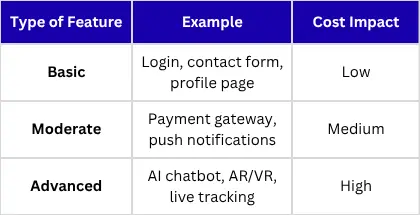
Each added layer of complexity increases:
- Development hours
- Infrastructure requirements
- Testing and maintenance effort
- Future upgrade costs
Example Scenario: The Cost of Feature Decisions
Imagine two businesses building similar eCommerce apps:
- App A: Simple app with product catalog and checkout.
- App B: Adds personalized recommendations, AI chat, and real-time analytics.
Both apps look similar to users, but App B’s development cost can be nearly double due to complex backend and third-party integrations.
According to Clutch and Statista, features and complexity account for up to half of total cost variations across app projects.
Why Complexity Impacts Android App Development Cost
1. More Code = More Time
Each feature adds planning, development, and testing cycles — increasing man-hours and cost.
2. Infrastructure Requirements
Advanced apps need robust servers, databases, and APIs — making infrastructure setup and maintenance more expensive.
3. Third-Party Integrations
Features like chat, maps, or analytics require integration with third-party APIs, each adding customization and ongoing maintenance cost.
4. UI/UX Customization
Interactive animations, personalization, and high-quality design enhance user experience but also raise cost.
5. Testing & Device Compatibility
Android apps must be tested across hundreds of devices — complexity multiplies testing effort significantly.
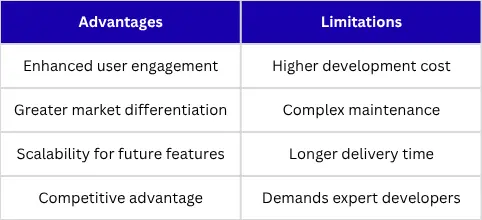
Pros and Cons of Feature-Rich Android Apps
Best Practices to Control Android App Development Cost
- Start with an MVP (Minimum Viable Product)
Launch only essential features first and collect user feedback before scaling.
- Plan Scalability from the Start
Choose modular architecture that allows you to add features later without reworking your codebase.
- Use Cross-Platform Frameworks
Frameworks like Flutter or React Native can save up to 30–40% in development cost.
- Partner with Experienced Developers
A skilled team like TechAvidus helps you balance innovation with efficiency — avoiding costly rework later.
- Focus on High-Value Features Only
Prioritize features that directly enhance user experience or business outcomes.

Expert Insight from TechAvidus
“The real driver of Android app development cost isn’t developer rates — it’s decisions about features and architecture,”
says TechAvidus’ Mobile Development Team Lead.
“When scalability and functionality are planned early, businesses save both time and money.”
At TechAvidus, we help you design and develop scalable Android apps with transparent cost planning, optimized architecture, and long-term support.
📞 Get a free consultation with our experts at techavidus.com
Conclusion: Build Smart, Spend Smart
Your Android app’s cost doesn’t just depend on who builds it — it depends on what you choose to build.
That one factor — complexity — can silently double your development cost or become your biggest competitive advantage.
With the right partner and strategy, you can:
- Build efficiently without compromising quality
- Avoid unnecessary expenses
- Scale your product with confidence
Talk to TechAvidus experts today to plan your app’s roadmap smartly — and make every feature count.

Bhavesh Ladva
Bhavesh Ladva specializes in MCP (Model Context Protocol) Server Development, helping businesses connect AI applications with external tools, APIs, databases, and business systems. His work focuses on building custom MCP servers that enable smoother tool execution, structured data access, and reliable AI integrations. By simplifying connections between AI models and existing workflows, Bhavesh helps teams reduce manual steps, improve process efficiency, and develop more practical AI-powered solutions. He prioritizes secure integrations, maintainable architecture, and scalable implementations aligned with real business requirements.