

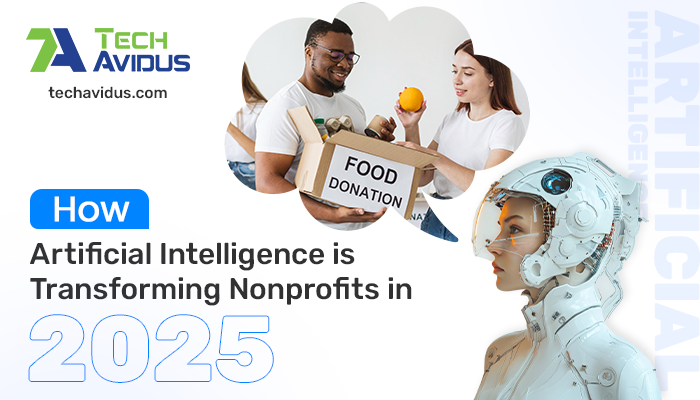
In the fast-changing world of technology, Artificial Intelligence for Nonprofits is no longer a distant dream—it’s a reality that’s helping organizations do more with less. Whether you're a small charity or a global foundation, AI for Nonprofits can save time, increase donations, and help you connect better with your supporters.
Let’s explore how AI is already transforming nonprofits and how your organization can start using it too.
What Is AI for Nonprofits?
In simple words, Artificial Intelligence means using smart technology to help you make better decisions, automate repetitive work, and understand your donors better. For nonprofits, this means:
- Reaching the right people at the right time
- Saving hours of manual work
- Getting more value out of your data
- Increasing donor engagement and trust
Why Nonprofits Are Adopting AI in 2025
Nonprofits usually have big goals but limited resources. That’s where AI becomes a valuable partner.
1. Smarter Fundraising
AI tools can study your donor history and tell you:
- Who is most likely to donate again
- When they might donate
- How much they are likely to give
This helps you create targeted campaigns that work better and cost less.
2. Improved Donor Retention
AI can alert you when a donor is losing interest. You can then send them a personalized message, invite them to an event, or simply thank them—all at the right time.
3. Automated Admin Work
AI can handle tasks like:
- Sending emails
- Updating donor profiles
- Scheduling follow-ups
That means your team can focus on what matters most—making a difference.
Real-Life Uses of AI in Nonprofits
Let’s take a look at how nonprofits are already using AI today:
AI Chatbots for 24/7 Help
Chatbots can answer donor questions any time of the day. They guide users through the donation process, provide information about your work, and even collect volunteer signups.
Donor Segmentation
AI can divide your supporters into groups based on their interests, behavior, and giving history. This helps you send the right message to the right person—just like a personal conversation.
Predictive Insights
Want to know which fundraising event will work best? AI can look at past data and help you decide. It can also tell you which campaigns need improvement.
Security & Fraud Detection
AI can spot unusual activity, helping protect your donors’ information and your organization’s funds.
The Future of Artificial Intelligence for Nonprofits
AI is only going to get better, faster, and easier to use. Here’s what we can expect:
- Affordable Tools: Even small nonprofits can access AI through free or low-cost tools.
- Better Donor Experiences: AI will help nonprofits build long-term relationships by making every supporter feel valued and heard.
- Responsible AI Use: Ethical data practices and privacy will become more important as AI continues to evolve.
How to Get Started with AI
You don’t need to be a tech expert to start using AI. Here’s a quick guide:
- Pick One Area to Improve: Maybe it’s donor outreach or donation tracking.
- Use the Right Tools: Platforms like Donorbox, Salesforce, and custom solutions from partners like TechAvidus can help.
- Train Your Team: Make sure everyone understands how the new tools work.
- Track Results: Keep an eye on what’s working and what’s not—AI tools often improve over time.
TechAvidus: Helping Nonprofits Succeed with AI
At TechAvidus, we help nonprofits use smart technology to grow their impact. Whether it's fundraising, donor management, or online giving—we build custom solutions that actually work.
Real Results from Our Work
We helped a nonprofit increase donations by integrating a secure and smooth Stripe payment system—making it easier for supporters to give.
We created a smart AI platform that helped our client raise more funds through better donor targeting and smart campaign tracking.
Final Thoughts
AI for Nonprofits isn’t about replacing people—it’s about giving your team more power to do what they do best. It helps you make better decisions, engage supporters, and raise more funds—all while saving time and money.
If you’re ready to take your nonprofit to the next level, TechAvidus is here to help.
👉 Let’s talk about how AI can transform your nonprofit. Contact Us today.
Bhavesh Ladva
Bhavesh Ladva is an AI Developer and rapid product development expert with over 10 years of experience in AI, machine learning, deep learning, and NLP. He specializes in turning ideas into functional, scalable products using modern AI-powered development tools such as Lovable, Bolt, Claude, and other emerging AI platforms. His experience spans AI integrations, APIs, automation, cloud platforms, and intelligent workflows, enabling him to take products from concept to production efficiently.