

Allow Google Analytics to measure how I use the site to enhance functionality and service.

Allows us to show personalized advertisements based on your browsing behavior.

Share my activity data with cookies for targeted advertising.

Customize my ad experience by allowing cookies to personalize the ads I see.
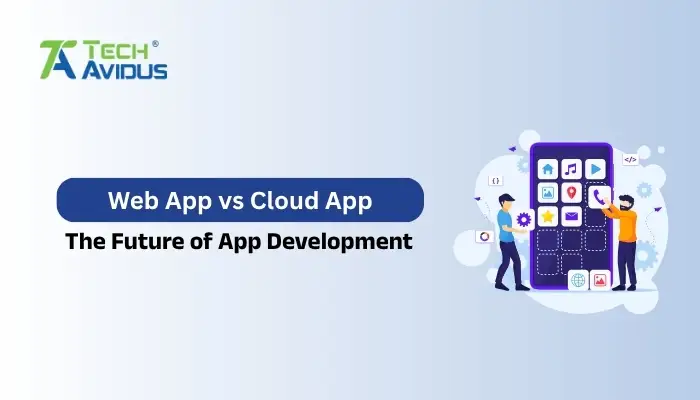
The digital transformation era has fundamentally changed how businesses build, deploy, and scale software applications. Organisations today face a critical decision when investing in digital solutions: should they develop a web application or a cloud application?
While the terms "web app" and "cloud app" are often used interchangeably, they represent distinct approaches to software development, deployment, and user experience. Understanding the differences between these technologies is essential for businesses seeking to optimise performance, reduce costs, improve scalability, and stay competitive in an increasingly digital marketplace.
As cloud computing continues to dominate the technology landscape, businesses are looking beyond traditional web applications to leverage the flexibility, security, and scalability that cloud-native solutions provide. According to industry reports from leading technology analysts, cloud adoption continues to accelerate globally as organisations prioritise agility, remote accessibility, and digital innovation.
In this comprehensive guide, we'll explore the key differences between web apps and cloud apps, their advantages, limitations, use cases, and how they are shaping the future of application development.

A web application, commonly known as a web app, is software that runs through a web browser. Users access these applications via the internet without installing them directly on their devices.
Popular examples include Gmail, Google Docs, Trello, Canva, and many business portals.
Web applications are built using technologies such as HTML, CSS, JavaScript, React, Angular, Vue.js, Node.js, PHP, Python, and .NET. They typically operate through a client-server architecture where users interact with a browser interface while application logic and data processing occur on remote servers.
The primary advantage of web apps is their accessibility. Users can access them from virtually any device with an internet connection and a modern browser. This platform independence significantly reduces development and maintenance costs compared to native software solutions.
Web applications are ideal for businesses seeking broad accessibility, rapid deployment, and simplified updates. Since updates occur on the server side, users automatically access the latest version without manual installations.
Cloud applications, or cloud apps, are software solutions designed specifically to leverage cloud computing infrastructure. Unlike traditional web applications, cloud apps use cloud services for processing, storage, data management, analytics, and scalability.
Cloud applications may include browser-based interfaces, mobile components, desktop integrations, and backend services distributed across multiple cloud environments.
Examples of cloud applications include Salesforce, Microsoft 365, Dropbox, Slack, AWS-based enterprise platforms, and cloud-based ERP systems.
Cloud apps utilise cloud platforms such as Amazon Web Services (AWS), Microsoft Azure, Google Cloud Platform (GCP), and Oracle Cloud. These applications can dynamically scale resources based on demand, ensuring optimal performance even during traffic spikes.
One defining characteristic of cloud applications is their ability to function partially offline while synchronising data when connectivity is restored. They also integrate advanced cloud capabilities such as artificial intelligence, machine learning, big data processing, automation, and serverless computing.
The primary distinction lies in architecture and infrastructure.
A web application focuses primarily on browser-based accessibility. It typically depends on a centralised server and requires continuous internet connectivity for functionality.
A cloud application, on the other hand, is built to utilise distributed cloud resources. It combines application services, cloud storage, scalable infrastructure, and advanced computing capabilities.
Think of it this way: every cloud app may have a web interface, but not every web app is a cloud application.
Cloud apps extend beyond browser functionality by leveraging cloud-native technologies that enable scalability, resilience, high availability, and intelligent automation.
Scalability has become one of the most critical considerations in modern software development.
Traditional web applications often face challenges when user traffic grows rapidly. Scaling typically requires additional server infrastructure, manual configuration, and ongoing maintenance.
Cloud applications excel in this area. They leverage elastic cloud resources that automatically adjust according to workload demands. Businesses can scale up during peak usage and scale down when demand decreases, optimising operational costs.
For example, an eCommerce platform experiencing heavy traffic during Black Friday can automatically allocate additional resources in a cloud environment without impacting user experience.
This dynamic scalability makes cloud applications particularly attractive for fast-growing businesses and enterprises with fluctuating workloads.
Security remains a top concern for organisations adopting digital solutions.
Web applications generally rely on server-side security measures, SSL encryption, authentication protocols, and regular software updates.
Cloud applications build upon these security practices while incorporating advanced cloud security features such as the following:
Identity and access management
Automated threat detection
Data encryption at rest and in transit
Compliance monitoring
Disaster recovery systems
Cloud providers invest billions annually in cybersecurity infrastructure, making cloud-based environments highly secure when implemented correctly.
However, organisations must still follow best practices for access control, data governance, and application security to minimise risks.
Budget considerations significantly influence application development decisions.
Web applications typically involve lower initial development costs and straightforward hosting expenses. Small businesses and startups often favour web apps because they require less infrastructure investment.
Cloud applications may involve higher architectural complexity during development. However, they often deliver greater long-term value through:
Reduced hardware costs
Pay-as-you-go pricing
Automated maintenance
Improved resource utilization
Faster deployment cycles
Lower downtime costs
Organisations seeking sustainable growth frequently find cloud applications more cost-effective over time due to operational efficiencies and scalability benefits.
Modern users expect seamless digital experiences across devices and platforms.
Web applications offer universal accessibility through browsers, making them convenient for users who need quick access without installations.
Cloud applications enhance user experiences through real-time synchronisation, personalised content delivery, collaborative features, and intelligent automation.
For example, cloud-powered collaboration platforms allow multiple users to work on the same document simultaneously while changes synchronise instantly across devices.
As remote and hybrid work environments continue to grow, cloud applications are increasingly becoming the preferred choice for organisations prioritising collaboration and productivity.
Different industries leverage web and cloud applications based on their specific requirements.
Healthcare organisations use cloud applications for secure patient records, telemedicine platforms, and AI-assisted diagnostics.
Financial institutions rely on cloud infrastructure for fraud detection, risk analysis, and secure transaction processing.
Retail businesses deploy cloud-based inventory management systems, customer analytics platforms, and omnichannel commerce solutions.
Educational institutions utilise cloud learning management systems that support remote learning, collaboration, and content delivery.
Meanwhile, web applications remain highly effective for corporate websites, online portals, booking systems, customer service interfaces, and content management platforms.
The future of application development is increasingly cloud-centric.
Several emerging trends are accelerating this shift:
Artificial Intelligence Integration
Cloud platforms provide the computational power necessary for AI-driven applications, enabling intelligent recommendations, automation, and predictive analytics.
Serverless Architecture
Developers can build applications without managing infrastructure, reducing complexity and improving development efficiency.
Microservices Architecture
Applications are becoming more modular, allowing teams to develop, deploy, and scale individual services independently.
Edge Computing
Cloud applications are leveraging edge networks to reduce latency and improve performance for geographically distributed users.
Multi-Cloud Strategies
Organisations are adopting multiple cloud providers to enhance resilience, optimise costs, and avoid vendor lock-in.
These innovations are redefining software development and creating opportunities for businesses to deliver faster, smarter, and more scalable digital experiences.

A web application may be the ideal choice if:
Your business requires rapid development and deployment.
You have budget constraints.
Users primarily access services through browsers.
The application has relatively predictable traffic patterns.
Offline functionality is not a critical requirement.
You need a straightforward solution for customer engagement or internal operations.
For startups and small businesses launching digital products, web applications often provide an excellent starting point.
A cloud application is typically the better option if:
You expect significant business growth.
Scalability is a priority.
Your application requires advanced analytics or AI capabilities.
You need high availability and disaster recovery.
Multiple users must collaborate in real time.
You require enterprise-grade security and compliance.
The application will serve a geographically distributed user base.
Cloud applications provide the flexibility necessary for modern digital transformation initiatives and future business expansion.
The shift toward cloud-native development reflects changing business expectations.
Organisations need applications that can adapt quickly, support remote workforces, integrate emerging technologies, and scale efficiently.
Cloud-native applications enable continuous innovation through automated deployments, rapid feature releases, and seamless integration with third-party services.
As digital ecosystems become increasingly interconnected, cloud-based architectures are emerging as the foundation of future-ready businesses.
Companies that invest in cloud-native solutions today position themselves for greater agility, resilience, and competitive advantage tomorrow.
The debate between web apps and cloud apps is not about determining a universal winner. Instead, it involves identifying the right solution for specific business objectives.
Web applications remain valuable for organisations seeking simplicity, accessibility, and cost-effective deployment. However, cloud applications are increasingly becoming the preferred choice for businesses focused on scalability, innovation, performance, and long-term growth.
As technologies such as artificial intelligence, machine learning, automation, and edge computing continue to evolve, cloud-powered applications will play a central role in shaping the future of digital experiences.
At TechAvidus, we help businesses design, develop, and scale both web and cloud-based applications tailored to their unique goals. Whether you're building a customer-facing platform, enterprise solution, SaaS product, or cloud-native ecosystem, our experienced development team can guide your digital transformation journey.

Bhavesh Ladva is a seasoned AI Developer with over 10 years of experience in machine learning, deep learning, and NLP. He has built scalable AI solutions across industries, leveraging technologies like Python, TensorFlow, and cloud platforms. Bhavesh is passionate about ethical AI and constantly explores innovative ways to solve real-world problems.
Our Top 1% Tech Talent integrates cutting-edge AI technologies to craft intelligent, scalable, and future-ready solutions.
All Rights Reserved. Copyright © 2026 | TechAvidus